5 minute reading
What a cross-chain stablecoin swap means
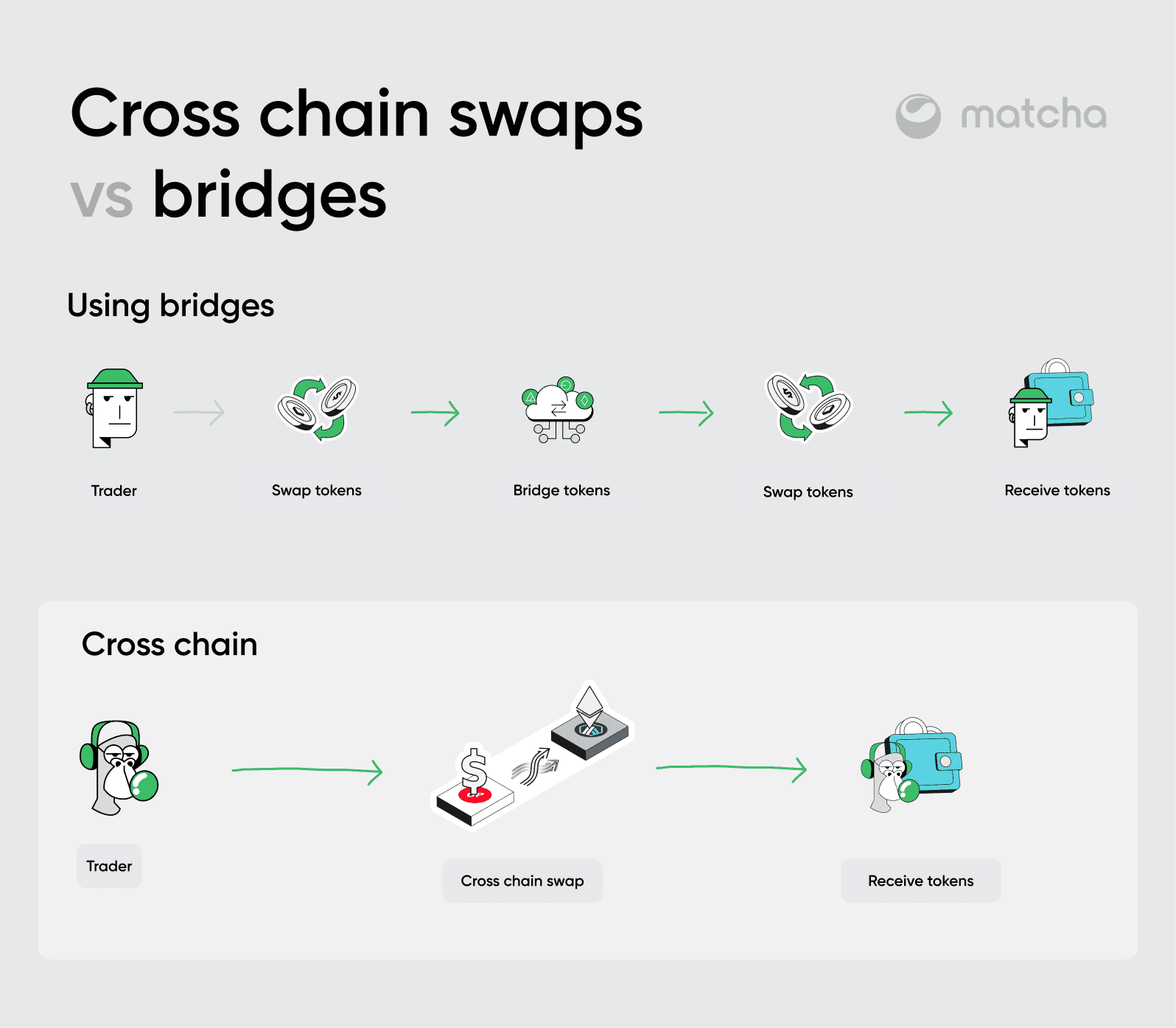
A cross-chain stablecoin swap involves transferring a stablecoin from one blockchain to another while maintaining its value and utility. Unlike traditional swaps that exchange one token for another (e.g., USDC to DAI), cross-chain swaps move the same token across different networks (e.g., USDC on Ethereum to USDC on Avalanche).
Common scenarios for cross-chain stablecoin swaps
Arbitrage Opportunities: Price discrepancies for the same stablecoin across different blockchains can be exploited for profit. For instance, USDT might trade at a slight premium on one network compared to another, allowing traders to buy low on one chain and sell high on another.
Ecosystem Navigation: Users may need to move stablecoins to access specific DeFi protocols or yield farming opportunities exclusive to certain blockchains. For example, transferring USDC from Ethereum to Arbitrum to participate in a lending platform.
Bridge Delays or Failures: Traditional token bridges can experience congestion, high fees, or security vulnerabilities. Cross-chain swaps offer a more efficient and often safer alternative to move assets across networks.
Suppose you hold USDC on the Ethereum network but wish to use a DeFi application on the Avalanche network that requires USDC. A cross-chain swap allows you to transfer your USDC directly from Ethereum to Avalanche, enabling seamless participation in the desired application without the need for multiple transactions or intermediaries.
How to swap stablecoins with Symbiosis.Finance
Swapping stablecoins across chains can be confusing – but Symbiosis simplifies the entire process into a single, streamlined flow. Here's how it works:
Connect your wallet. Visit Symbiosis swap app and click “Connect Wallet.”
You can use MetaMask, Trust Wallet, WalletConnect, or other major wallet providers. No registration or KYC is needed.
Select your source chain, stablecoin, and amount. Choose the blockchain where your stablecoins are currently held (e.g., BNB Chain or Ethereum).
Then select the stablecoin you want to move (like USDT or USDC) and enter the amount you'd like to swap.
Choose the destination chain and stablecoin. Pick the target blockchain where you want your funds to arrive (e.g., Polygon, zkSync, Arbitrum). Symbiosis will automatically match the correct version of the same stablecoin on that chain – so if you're sending USDT, you'll receive USDT on the new network.
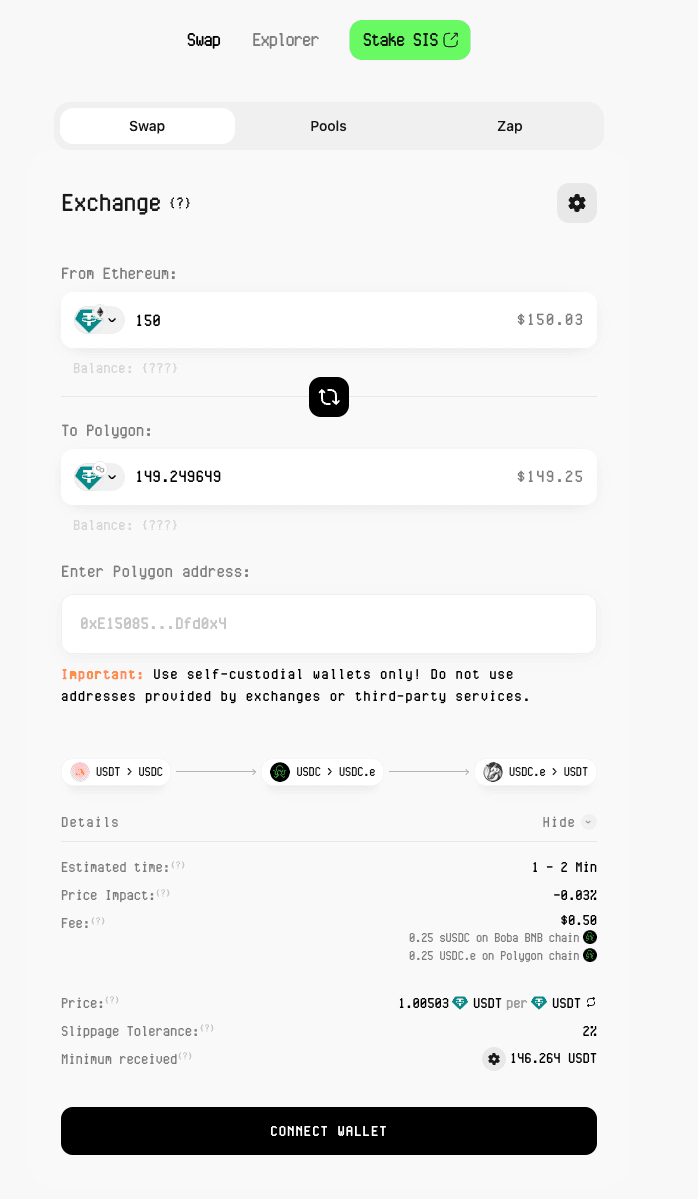
Review the route and confirm the swap
Receive funds instantly. Symbiosis automatically finds the most efficient route using its aggregated liquidity sources.
You’ll see the estimated output, route details, and total fee before proceeding.
Once you're ready, sign the transaction in your wallet to confirm.
The swap is executed end-to-end in one motion.
You’ll receive your stablecoins on the destination chain within about a minute – no bridging, no secondary swaps, and no need to hold native gas tokens on the receiving chain.

Cross-chain stablecoin swap: Platform rankings (2026)
Symbiosis.Finance isn’t the only platform offering cross-chain swaps – but when it comes to stablecoins, speed, and simplicity, it stands out.
Below is a comparison of the most popular crypto swap platforms that support stablecoin movement across chains.
We’ve ranked them based on the number of supported chains, user experience, transaction speed, token flexibility, and their unique advantages.
Platform | Chains Supported | UX Simplicity | Speed | Token Support | Unique Edge |
Symbiosis.Finance | 30+ (EVM, TON, zkSync, more) | <1 min | All major stables | 1-click swaps, TON support, no KYC | |
Stargate Finance | EVM-only (ETH, Arbitrum, BNB, etc.) | Fast | USDT, USDC | Native LayerZero bridging | |
Rhino.fi | L2-focused (ETH, zkSync, StarkNet) | Medium | USDC, DAI, USDT | L2-centric with gas subsidies | |
Portal Bridge (Wormhole) | Solana, Ethereum, Aptos, etc. | Slow | USDC only mostly | Widest multichain bridge, dev focus | |
Jumper Exchange | Aggregator (many chains) | Medium-fast | Most major tokens | Best for routing, not stablecoin-first |
Why Symbiosis is the best stablecoin swap solution
When it comes to moving stablecoins across blockchains, most tools either complicate the process or leave users exposed to high fees, slow settlement, or fragmented interfaces. Symbiosis addresses all of these issues – offering a solution that’s both technically sound and genuinely user-friendly.
Unified interface for any-to-any swap
Whether you’re moving USDC from Ethereum to Arbitrum, USDT from BNB Chain to Polygon, or DAI from zkSync to Base, it all happens in one place. There’s no need to bridge manually or perform multiple swaps – Symbiosis handles everything in a single, streamlined flow.
No need to hold native gas tokens
Most cross-chain platforms require users to hold the native token of the destination chain to pay for gas. Symbiosis eliminates this step by covering gas automatically, allowing you to complete a swap even if you don’t hold AVAX, MATIC, SOL or other required tokens.
Ecosystem-first architecture
Symbiosis is built with flexibility in mind. It doesn’t limit you to just Ethereum and a few L2s. The platform actively supports and integrates high-growth ecosystems like TON, zkSync, Scroll, Linea, and more – making it ideal for users navigating newer DeFi environments.
Low fees, high speed, and full transparency
Transactions on Symbiosis typically finalize in under a minute. Fees are negligible, clearly displayed, and there are no hidden steps or unexpected costs buried in the bridging process. You know exactly what you’re getting before you sign.
For anyone serious about stablecoin mobility, Symbiosis offers the most complete cross-chain swap experience available today.

Things to watch when swapping stablecoins across chains
Swapping stablecoins across different blockchains opens up speed, flexibility, and yield opportunities – but there are still risks to be aware of. While Symbiosis.Finance is designed to minimize these issues, some challenges are common across the broader multichain ecosystem. Here’s what to look out for, and how Symbiosis helps reduce your exposure.
Slippage, MEV, and spoofed tokens
Slippage and front-running (MEV) can occur on chains with low liquidity or poor routing. Some platforms even expose users to spoofed tokens – fake coins with the same ticker but a different smart contract.
How Symbiosis helps:
Uses verified token contracts only – no fakes or clones.
Aggregates liquidity across trusted DEXes to reduce slippage.
Optimizes routing to avoid vulnerable paths subject to MEV.
Gas costs on the source chain
Every on-chain transaction has a fee, and if you're starting your swap on Ethereum or another busy network, those fees can spike.
How Symbiosis helps:
Consolidates the swap and bridging into a single transaction.
Allows you to start swaps from low-fee chains like BNB or Polygon.
No gas required on the destination chain – Symbiosis handles it for you.
Bridge delays and reliability
On some platforms, swaps rely heavily on third-party bridges, which can become congested, fail, or require long wait times.
How Symbiosis helps:
Uses its own native cross-chain messaging layer, avoiding slow or untrustworthy bridges.
Offers fast finality – most swaps settle in under one minute.
Transparent routing – you always see exactly what’s happening under the hood.
Verifying the right token contracts
Stablecoins often exist in multiple formats across chains (e.g., native vs. wrapped), and scam tokens can look nearly identical. Mistakenly receiving a fake or incompatible token is a real risk on manual platforms.
How Symbiosis helps:
Automatically maps and matches official, verified tokens on both the source and destination chains.
Removes the need to manually paste or check token contracts.
Displays token logos, names, and routes from trusted liquidity pools only.
Swapping should be safe, smooth, and predictable. With Symbiosis, it is.

Share this: