5 minute reading
Why no-KYC swapping matters for privacy
For many, crypto has always been a path to greater privacy and control. But that vision often clashes with the growing pressure on centralized exchanges to enforce Know Your Customer (KYC) requirements.
To comply with global regulations, most major exchanges now require users to submit personal documentation – including government IDs, proof of address, and biometric data – before they can trade or withdraw funds. This process is not only time-consuming, but also introduces risks that crypto was meant to avoid in the first place: data breaches, surveillance, and the permanent linking of your identity to your wallet.

Worse still, these requirements can prevent people from accessing crypto at all. Users in underbanked regions, or those concerned about digital privacy, may find themselves locked out – not because of security threats, but because they lack paperwork.
That’s where no-KYC crypto swap platforms come in. These services offer a way to swap crypto without registration, using your wallet as your identity. No sign-ups, no data storage, no waiting days for approval. Just fast, non-custodial crypto swaps that let you maintain control over your assets and your personal information.
Swapping without KYC – what it actually looks like
If you’re trying to swap crypto without going through KYC, the last thing you want is a platform that feels like a maze.
That's where Symbiosis.finance stands out as a no-KYC swap solution – making the entire swap process incredibly straightforward.
How swapping on Symbiosis.finance works
Here’s what happens when you swap crypto using Symbiosis.finance, a non-custodial, cross-chain swap platform with no KYC required:
Connect your wallet – MetaMask, Trust Wallet, or almost any other Web3 wallet works. No account needed.
Choose the token you’re swapping from and the token you want to receive – you can go cross-chain (e.g., swap ETH on Ethereum for USDT on BNB Chain).
Confirm the transaction – Symbiosis handles everything behind the scenes: routing, bridging, swapping.
Receive your tokens, directly in your wallet – no manual bridging, no multiple dApps, no personal info.
And that’s it. You don’t need to leave the app or sign up for anything. It's fully on-chain, fully decentralized, and works across chains like Bitcoin, Ethereum, Arbitrum, BNB Chain, and Polygon.
The alternatives: other no-KYC swap methods
So what if you’re not swapping cross-chain? You still have solid KYC-free options – but each comes with trade-offs.
Single-chain DEXs (e.g., Uniswap, Trader Joe, PancakeSwap)
These platforms let you swap crypto without KYC as long as you're staying on one chain.
Pros: Fast, deep liquidity, great for tokens on the same network.
Cons: No support for moving assets across chains. Want to go from Polygon to BNB Chain? You’ll need a bridge – and that gets messy.
DEX aggregators (e.g., 1inch, ParaSwap)
Aggregators scan dozens of decentralized exchanges to find you the best price. No sign-up required, no personal data involved.
Pros: Optimized pricing, better execution for larger trades.
Cons: Still limited to single-chain swaps unless integrated with bridges, and many users find the UX overwhelming.
Why Symbiosis is the best of both worlds
Swapping on Symbiosis.finance solves the two biggest pain points in no-KYC crypto swapping:
You’re not stuck on one chain.
You’re not juggling five tools to move assets across chains.
It’s a one-stop shop for non-custodial, cross-chain crypto swaps, and it works just as easily as using Uniswap – only without the chain limitations.
Also, because there’s no user data involved, it aligns with the privacy-first spirit of crypto.
If your goal is to swap crypto without KYC and without hassle, this is arguably the most efficient route available today.

No-KYC crypto exchange methods
Platform | KYC Required | Cross-Chain Support | User Experience | Pros | Cons |
Symbiosis.finance | No | Yes | Excellent | - Seamless cross-chain swaps - No registration or KYC - Gasless options available | - Relatively newer platform; may have fewer integrations compared to established DEXs |
Uniswap | No | No | Good | - High liquidity - User-friendly interface - No KYC required | - Limited to Ethereum and supported L2s - Requires manual bridging for cross-chain swaps |
1inch (Aggregator) | No | Limited | Moderate | - Aggregates best prices across DEXs - No account needed | - Cross-chain swaps require external bridges - Interface may be complex for beginners |
Reality check: no KYC doesn’t mean no trace
Privacy tools can help – but come with caveats
Swapping crypto without KYC is possible – and often pretty easy – if you’re staying on-chain. But here’s the part a lot of people overlook: just because no one asked for your ID doesn’t mean your activity is invisible.
Blockchains are transparent by design. Every transaction, from your first swap to your final transfer, is logged on a public ledger. Your wallet might not be tied to your name, but it is tied to a history. And once you do one of the following:
Withdraw to a centralized crypto exchange,
Cash out through a fiat on-ramp (like a bank account),
Or use wallets connected to your personal info (say, MetaMask linked to an email),
…you start to leave a paper trail. That’s where pseudonymity turns into real-world identity.
And what about when you want to cash out?
Sure, there are tools designed to protect your identity. Coin mixers (like Tornado Cash) and privacy coins (like Monero or Zcash) can make transactions harder to trace. But using them isn’t risk-free.
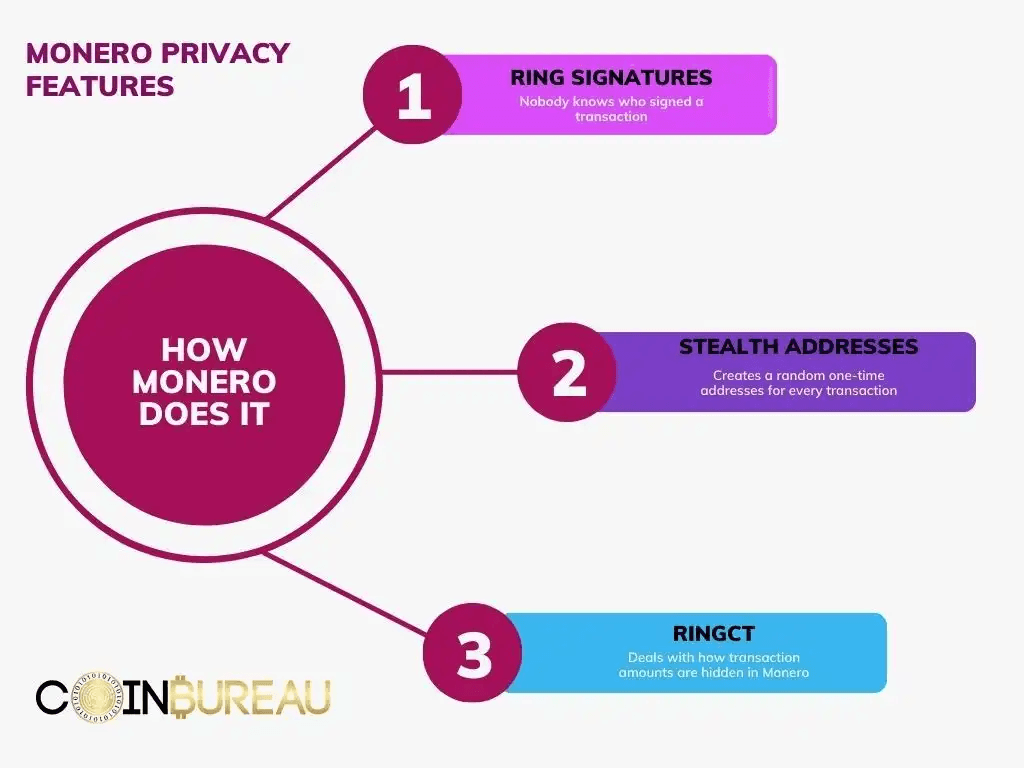
In some jurisdictions, these tools fall into a legal grey area. In others, they’re outright banned. For instance, Tornado Cash has faced regulatory crackdowns, and Monero has been delisted from several centralized platforms due to compliance pressure.
So while they might boost privacy, they also increase friction – and potentially, legal risk.
Here’s the truth: if you’re planning to convert crypto to fiat and spend it in the traditional financial system, you’ll hit a wall. You have two choices:
Use decentralized peer-to-peer platforms like LocalCryptos or Bisq to sell crypto anonymously. But expect high fees, lower liquidity, and the need to vet counterparty risk yourself.
Go through a centralized exchange or fiat off-ramp – which almost always means submitting to KYC.
So while no-KYC crypto swapping works great for on-chain activity – whether you’re diversifying assets or moving across chains – once you want to touch the banking system, identity checks are hard to avoid.

Want to swap crypto without KYC? Try Symbiosis
If you’re looking for a simple way to exchange crypto without handing over your ID, Symbiosis.finance is one of the best options out there.
It’s fast, doesn’t ask for personal info, and works across chains – so you can move tokens between networks like Ethereum, Arbitrum, Polygon, and BNB Chain without needing a bridge or multiple apps. You just connect your wallet, pick your tokens, and hit swap. That’s the whole process.
There are no hidden fees, no signups, and in many cases, no gas to pay either. It’s non-custodial, meaning your crypto stays in your wallet the whole time.
Compared to single-chain DEXs or complex aggregators, Symbiosis keeps things clean and efficient – and it doesn’t require KYC at any point.
If your goal is to keep things private and hassle-free, it’s worth checking out.

Share this: