7 minute reading
How cross-chain bridges move crypto in DeFi
The DeFi space is projected to hit $42.76B in 2025 – and cross-chain bridges are critical to keeping it all connected. We break down the top five crypto bridges this year, comparing their speed, cost, security, and chain support. Symbiosis leads for its all-in-one UI, non-custodial MPC model, support for 30+ chains including Bitcoin, and 430+ token pairs–making it the most complete cross-chain solution for 2025.
The ‘big market’ of moving crypto
There are so many names floating around DeFi (Decentralised Finance) to describe protocols that let you exchange one kind of crypto for another.
First, you have decentralised exchanges (DEXes) that use automated market makers (AMMs) to enable swaps between tokens–usually on the same chain. Then come the cross-chain solutions, which can feel like a patchwork of overlapping mechanisms: lock and mint bridges, burn and mint bridges, liquidity pool-based bridges, rollup-to-L1 bridges, zk bridges, message-passing bridges – each designed to solve the same core challenge in slightly different ways.
And if that weren’t enough, Decentralised Finance (DeFi) is full of metaphor-heavy names like wormholes, portals, routers, relayers, and tunnels – all trying to solve the same core problem: moving value and data between blockchains.

But for most users, it boils down to a simple need: How can I move my crypto from one chain to another without signing up to a centralised exchange or risking my funds?
That’s why we’ve put together a clear, up-to-date list of the top five bridging solutions to use in 2025. We’re focusing on tools that offer a strong balance across four key areas:
Supported chains and tokens, prioritizing bridges that connect many networks and offer broad token support;
Transaction speed and fees, favoring fast, cost-efficient transfers;
Security and reliability, with a focus on audited, non-custodial protocols that have a solid operational record;
Ease of use, recognizing bridges that streamline the experience with intuitive design, even if this is a secondary factor.
But before diving in, we’ve provided a comparison chart up front for those that don’t have the time to read the whole thing!
Best crypto bridges of 2025 – compared
Bridge | Chains Supported | Asset Type | Fee Structure | Security | Transfer Speed | Interface Type | Standout Feature |
Symbiosis Finance | 30+ (EVM + non-EVM, inc. Bitcoin) | Wrapped via relayers (with AMM swap) | Low, optimized via DEX routing | Non-custodial, MPC + relayers | Fast (single transaction swap + bridge) | All-in-one swap + bridge UI | Supports 430+ token pairs, inc. Bitcoin |
Synapse Protocol | 20+ (mainly EVM + Solana) | Wrapped via LP model | Very low, avg. 80% cheaper than rivals | Audited smart contracts, LPs | Fast (within minutes) | Clear swap UI w/ slippage info | Lowest cost cross-chain routing |
Stargate (LayerZero) | 40+ (EVM, Tron, Optimism, etc.) | Native assets (no wrapping) | 0.06% per transfer | LayerZero security (validators + oracles) | Instant finality | One-click cross-chain swap | Unified liquidity + native asset support |
Portal (Wormhole) | 30+ (EVM, Solana, Cosmos, Sui, Aptos) | Wrapped (mint & burn model) | <$0.01 per transfer | Guardian nodes (Wormhole); patched past exploit | Fast finality | Minimal, with multi-asset support | Extensive chain compatibility |
THORChain (via THORSwap) | 16 (BTC, ETH, BNB, Cosmos, Solana, etc.) | Native assets (no wrapping) | ~0.5% avg (slip-based); small txs free | Audited, open-source, native coin custody | Fast (real-time liquidity pool execution) | DEX-style UI via THORSwap | True native asset swaps without wrapping |
Symbiosis Finance – a unified cross-chain swap and bridge protocol
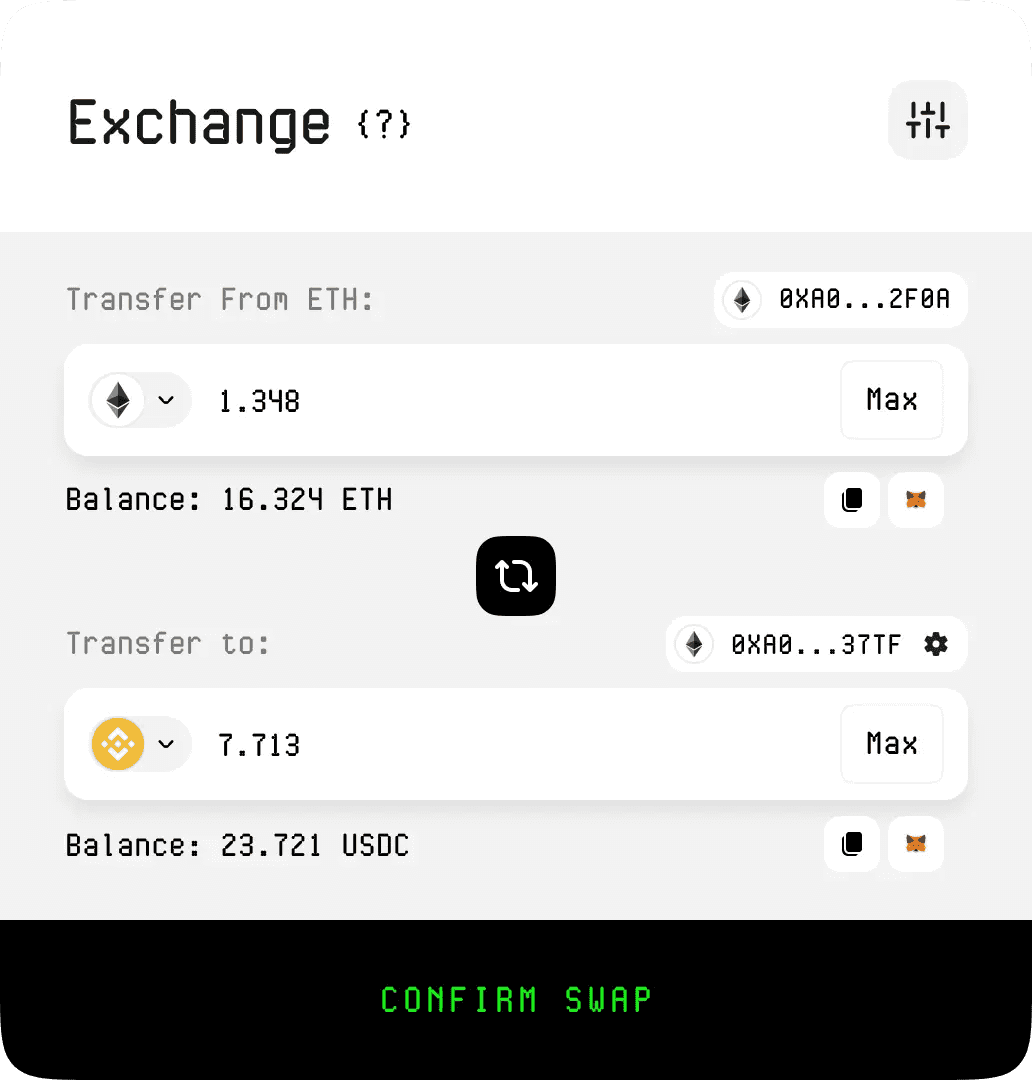
Symbiosis Finance is a cross-chain bridge and automated market maker (AMM) that enables seamless crypto swaps across multiple blockchains. As of 2025, it supports more than 30 networks – including Ethereum, BNB Chain, Polygon, Avalanche, Bitcoin, and several non-EVM chains–making it one of the most broadly connected protocols on the market.
At its core, Symbiosis offers a streamlined solution for multi-chain token transfers. Users can exchange assets between any supported chains in a single transaction, with the protocol automatically identifying the most efficient DEX routes to minimize slippage and fees. This all-in-one design reduces the complexity typically associated with cross-chain transactions.
Unlike custodial services, Symbiosis operates in a fully decentralized and non-custodial way. It uses a network of MPC (multi-party computation) nodes and relayer infrastructure to handle asset bridging securely, without requiring users to give up control of their funds.
In terms of performance, the bridge is optimized for speed and cost-efficiency. Most transactions are processed quickly, with gas optimization handled through smart DEX routing. With support for over 430 token pairs – including native Bitcoin swaps – Symbiosis stands out.
Key highlights:
Broad blockchain support (30+ networks including EVM and non-EVM)
Over 430 supported token pairs
Non-custodial security via MPC and relayers
Fast, low-fee transfers through integrated swap and bridge mechanics
Single-click interface designed for simplicity
This ultimately makes Symbiosis the best option for users seeking a reliable, low-friction cross-chain bridge in 2025.
Explore how it works with a real example — try the Tron Bridge here.

Synapse Protocol is a cross-chain bridge designed to facilitate low-cost and high-speed transfers across multiple blockchain networks. Since its launch in 2021, it has processed over $5 billion in transfer volume, becoming a key infrastructure layer for blockchain interoperability in 2025.
The protocol supports more than 20 blockchains, with a primary focus on EVM-compatible networks, while also offering a dedicated Solana-Ethereum bridge to support non-EVM transfers. This makes it a practical option for users looking to move assets like stablecoins and other tokens between major ecosystems without relying on centralized exchanges.
Synapse’s core advantage lies in its competitive fee structure. A 2024 comparison study found that Synapse offered lower transaction costs on the majority of cross-chain routes – often delivering up to 80% in savings versus other bridges. This is achieved through a liquidity pool model and efficient routing, allowing for near-instant finality on most transfers.
The protocol uses audited smart contracts to ensure a secure environment for cross-chain swaps. Its user interface provides clear visibility into the estimated output on the destination chain, including built-in slippage protection – helping users complete transactions with a high level of transparency and predictability.
Key highlights:
20+ supported chains, primarily EVM-compatible
Dedicated Solana-Ethereum bridge for non-EVM swaps
Up to 80% lower fees across most routes (based on 2024 data)
Fast cross-chain transfers, often completed in minutes
Secure architecture using audited smart contracts and LP model
Transparent UI with real-time output estimates and slippage control
With its strong balance of speed, affordability, and ease of use, Synapse Protocol remains a strong choice for fast, low-fee crypto bridging in 2025.
Stargate (LayerZero) – native asset transfers with unified liquidity
Stargate is a cross-chain bridge built on the LayerZero interoperability protocol, offering a solution to common challenges in multi-chain token transfers – namely liquidity fragmentation, slow transaction finality, and reliance on wrapped tokens.
What sets Stargate apart is its ability to support native asset transfers across more than 40 blockchains, including Ethereum, BNB Chain, Polygon, Arbitrum, Optimism, Avalanche, and Tron. Instead of minting synthetic or wrapped versions of tokens, Stargate enables direct swaps using unified liquidity pools that are accessible across all supported chains. This model allows for seamless movement of assets with deep liquidity and no fragmentation.
Transfers are typically confirmed with instant finality, and the protocol charges a low, flat fee of 0.06% per transaction. Stargate also offers flexibility in transaction speed and cost, giving users the option to prioritize speed or cost efficiency depending on their needs.
Security is handled through LayerZero’s ultra-light node architecture, which relies on a combination of validators and oracles to verify transactions across chains. For added usability, Stargate includes features like destination chain gas token support, helping users avoid the inconvenience of stranded assets.
Key highlights:
Direct native token transfers–no wrapping required
40+ supported blockchains with shared liquidity pools
Instant finality with a flat 0.06% fee
LayerZero-powered security via validators and oracles
Optional gas token delivery on destination chain
Choice between fast or economical transfer modes
For users looking to move native assets quickly and securely across major chains, Stargate is one of the most established and scalable crypto bridges available in 2025.
Portal (Wormhole Bridge) – broad multi-chain compatibility and fast, low-fee transfers
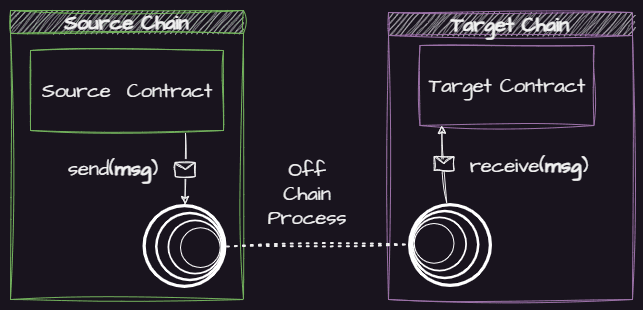
Portal is the token bridge built on the Wormhole protocol, offering a wide-reaching solution for transferring digital assets across a diverse set of blockchain networks. As of 2025, it supports more than 30 chains – including EVM-compatible blockchains, Solana, Cosmos-based networks, Near, Sui, Aptos, and other emerging Layer-1 platforms making it one of the most broadly integrated cross-chain bridges currently available.
The bridge uses a lock-and-mint model to facilitate transfers: assets are locked on the source chain and wrapped equivalents are minted on the destination. This approach allows Portal to support not only standard token transfers but also more complex operations such as cross-chain NFT transfers and dApp interoperability.
Transaction fees are among the lowest in the market–typically well under $0.01–and transfers achieve fast finality through Wormhole’s network of guardian nodes, which monitor and verify cross-chain activity in real time.
While the protocol experienced a notable security incident in 2022, in which approximately 120,000 wETH were exploited, the issue was promptly addressed, with funds restored and security practices significantly improved. Wormhole has since undergone extensive third-party audits and now operates with enhanced security monitoring.
Key highlights:
Supports 30+ blockchains, including Solana, Cosmos, and newer Layer-1s like Sui and Aptos
Uses a lock-and-mint model for wrapped asset transfers
Enables cross-chain NFT and dApp interactions
Very low fees (typically <$0.01 per transfer)
Fast finality through guardian node verification
Strengthened security practices following earlier vulnerabilities
With its broad ecosystem support and low operational cost, Portal remains a key infrastructure piece for users needing reliable multi-chain bridging in 2025.

THORChain (via THORSwap) – decentralized native asset bridge for Layer-1 swaps
THORChain offers a distinct approach to cross-chain bridging by enabling direct swaps of native assets without relying on wrapped tokens. Through its primary interface, THORSwap, users can exchange cryptocurrencies such as Bitcoin, Ether, BNB, ATOM, and others across 16 supported blockchains using liquidity pools composed of the assets themselves.
Unlike most cross-chain bridges that operate by locking and minting pegged tokens, THORChain functions as a decentralized liquidity network. Each transaction draws from pools of native assets, allowing for trustless, non-custodial swaps between Layer-1 chains. Users retain full control of their funds throughout the process, eliminating the need to interact with centralized intermediaries.
The protocol supports over 5,000 trading pairs and includes integrations with both EVM and non-EVM blockchains, including Cosmos and Solana. Swap fees are transparent–generally around 0.25–0.3% per transaction plus a variable slip-based fee, which typically averages about 0.5%. As an added incentive, small transactions under $100 are currently exempt from protocol fees.
THORChain has also made significant strides in security. After experiencing a series of exploits in its early stages, the protocol has undergone multiple third-party audits from firms like Halborn and PeckShield. Its infrastructure has since been reinforced, and it continues to operate with open-source transparency and a decentralized validator network.
Key highlights:
True native asset swaps–no wrapping required
Supports 16 chains, including Bitcoin, Ethereum, Solana, Cosmos, and BNB Chain
Over 5,000 trading pairs available via THORSwap
Transparent fee structure (~0.5% average), with no fees on small transfers
Decentralized, non-custodial protocol using native liquidity pools
Audited and actively maintained by a decentralized validator set
For users seeking a fully decentralized and trust-minimized way to move assets like Bitcoin or Ether across blockchains, THORChain is a good choice in 2025.
Choosing the right cross-chain bridge in 2025
According to The Business Research Company, the DeFi market is projected to grow from $30.07 billion in 2024 to $42.76 billion in 2025, marking a compound annual growth rate (CAGR) of 42.2%. With this rapid expansion, the role of cross-chain bridges is becoming more critical than ever – enabling the seamless movement of assets across an increasingly fragmented blockchain landscape.
Understanding the available options – and choosing the best crypto bridge for your specific needs–is essential. Whether your priority is low-cost transfers, native asset support, or broad multi-chain compatibility, each of the bridges featured in this list offers a different approach to solving the interoperability challenge.
In 2025, protocols like Symbiosis, Synapse Protocol, Stargate (LayerZero), Portal (Wormhole), and THORChain represent some of the most reliable and widely used tools for moving assets across networks – each with the potential to play a foundational role in your journey through DeFi.
Choose wisely.

Share this: