All posts
Send money abroad with no KYC — crypto transfer guide
Banks ask for ID, exchanges freeze accounts — but you can move funds across borders without an account at all. Here's how cross-chain swaps make crypto transfers cheap, fast, and fully in your control.
Swaps

Numbers
Proven performance
TL;DR
Key takeaways
Bank transfers abroad cost 6%+ plus hidden FX fees and take days through layers of correspondent banks.
Buy crypto privately with cash at Bitcoin ATMs or P2P sites like Bisq — no ID or account needed.
Symbiosis bundles bridging and swapping into one transaction, delivering stablecoins straight to any wallet.
Transfers land in about 45 seconds, and failed swaps auto-refund your funds, usually in stablecoins.
Send a small test transfer first and double-check the address — crypto payments can't be reversed.
10 minute reading
Swaps
Why crypto remittances still fall short
Sending money internationally shouldn’t be this hard. But with legacy remittance services, it often is. Transfer fees frequently exceed 6%, and when you add hidden FX spreads and intermediary bank charges, the amount that actually arrives can be significantly lower than what you sent.
The experience is costly, slow and frustrating. Transfers are tied to banking hours, involve layers of correspondent banks, and can take several days to complete.
Crypto remittance promised to change all that – but in many cases, it hasn’t. Here’s why:
KYC requirements are still the norm. Users are forced to upload IDs and sensitive documents, often just to send a small amount – putting privacy at risk and adding delays.
Most crypto transfers rely on centralized exchanges (CEXs), which reintroduce platform custody, withdrawal fees, and FX markups.
The typical process is clunky and fragmented. You often need to:
Buy crypto → transfer to exchange → bridge to target chain → swap to stablecoin → send to recipient
Each step adds friction, cost, and the chance something goes wrong.
Let’s say you want to send money from the US to a friend in the Philippines. You buy BTC on Binance (after passing KYC), then bridge it to a different chain, swap it into a stablecoin, and send it on – all while paying multiple fees. The recipient still needs to manage wallets, bridges, and stablecoin conversions.
Now imagine doing all that in one step – without KYC, without an exchange, and without recipient effort.
A simpler, smarter flow – send money via crypto
Thanks to Symbiosis.Finance, there's now a way to send money abroad via crypto with no KYC and no complexity. This decentralized remittance method lets you:
Buy crypto privately (via P2P or Bitcoin ATMs)
Bridge and swap cross-chain automatically
Deliver stablecoins or tokens directly to any wallet
It's fast, permissionless, and non-custodial. Moreover:
No recipient involvement: They don’t need to bridge, swap, or even know what DeFi is. You handle it all.
Truly KYC-free: No ID, no forms. Just connect your wallet and go. It’s a KYC-free crypto money transfer solution.
Cross-chain swaps made simple: Convert between Ethereum, BNB Chain, Polygon, Solana – even Bitcoin – in one seamless step.
Fast crypto delivery: Transfers typically complete in under a minute. (~45 seconds on average)
Global support: Send and receive anywhere with wallet access – no account or login needed.
This is peer-to-peer crypto remittance done right: private, fast, multi-chain, and stablecoin-ready.
How to send money abroad via crypto no KY:
Buy crypto without KYC
To start, you need crypto in a self-custodial wallet – no ID required. Here’s how:
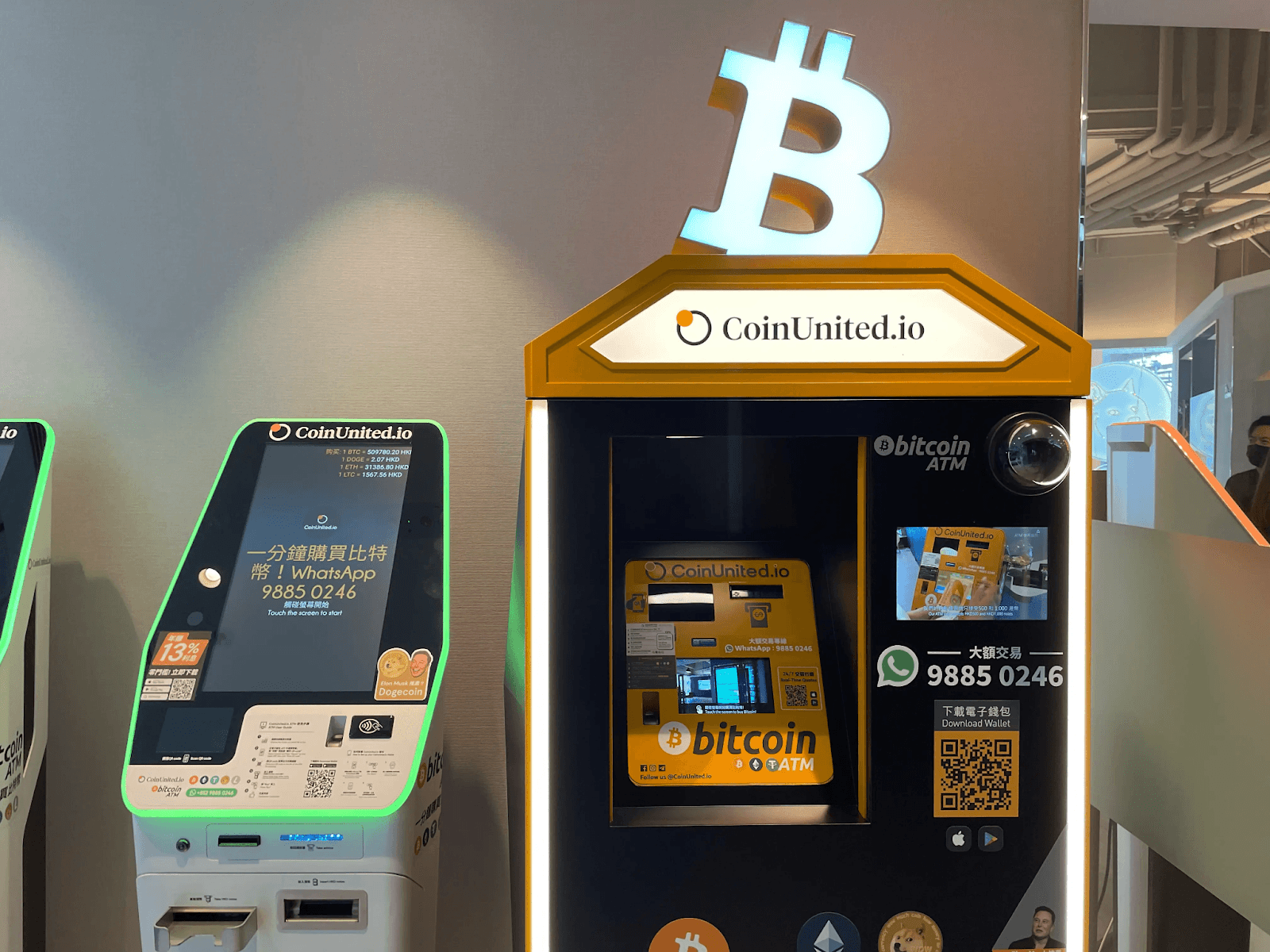
Option A: Bitcoin ATMs
Insert cash, get Bitcoin. No registration, no forms. In much of the EU, you can transact up to €990/day under MiCA rules without triggering KYC.
This is perfect for Bitcoin ATM cash-to-crypto conversions when you need privacy. Fees at BTC ATMs range from 6–12%, so this method suits users prioritizing anonymity over cost.
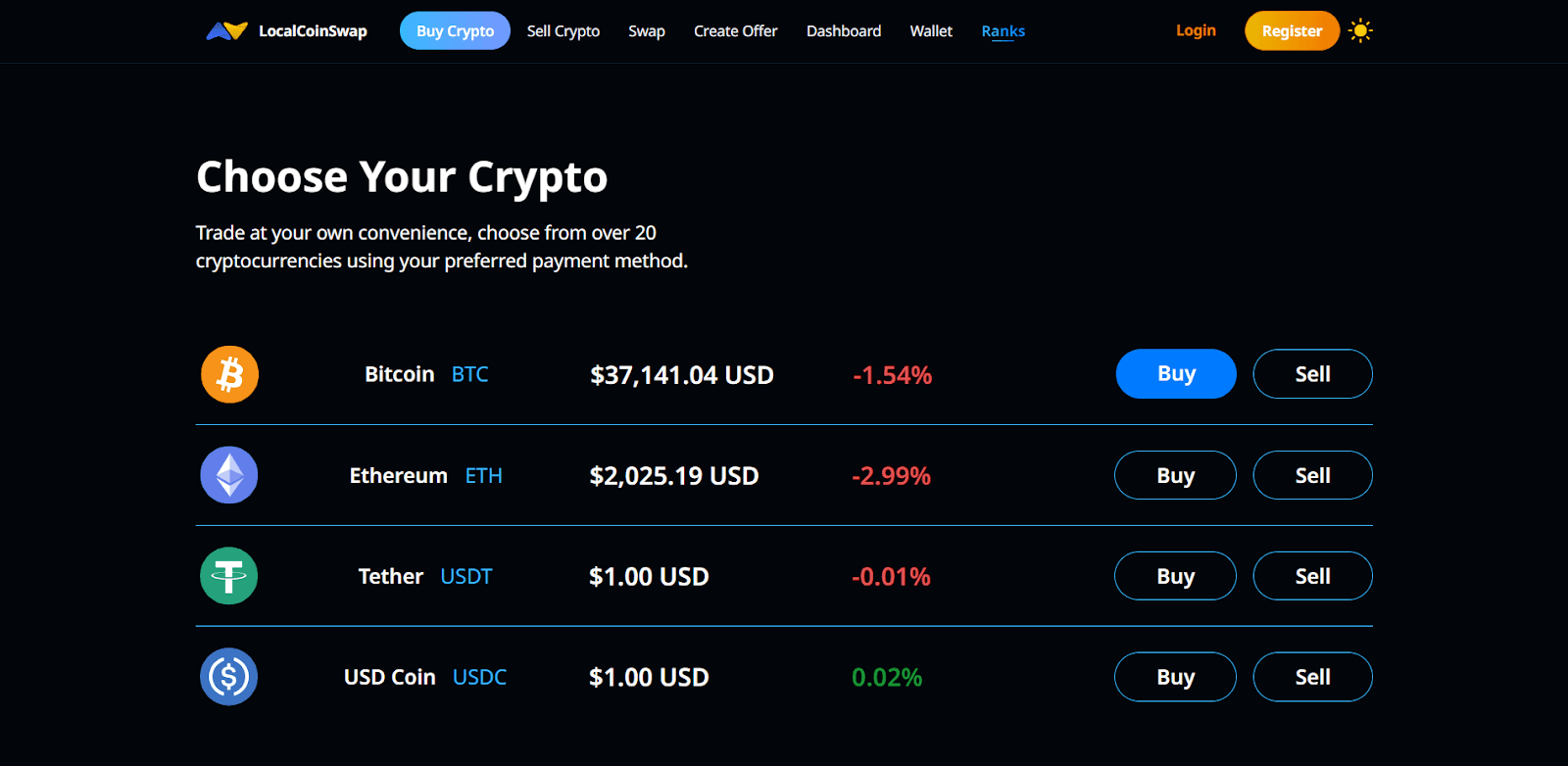
Option B: Peer-to-peer platforms / no-KYC DEXes
Use platforms like LocalCoinSwap, Peach Bitcoin, or Bisq to buy BTC or ETH via SEPA transfers or cash – no ID required.
These methods align with the growing demand for KYC-free crypto solutions – especially in cross-border settings.
(Optional) Convert to stablecoin
To protect against volatility, swap your BTC or ETH into a stablecoin (e.g., USDC or USDT) before transferring.
You can also do this via Symbiosis.finance – just make sure to put your own address as the recipient.
Use Symbiosis to swap, bridge & deliver
Now, use Symbiosis.Finance to complete the decentralized cross-chain swap and send funds directly to your recipient’s wallet.
Connect wallet
Head to app.symbiosis.finance and connect your preferred wallet (MetaMask, Trust Wallet, etc.).
Set swap parameters
Choose:
Source chain and token (e.g., Ethereum → USDC)
Destination chain and token (e.g., BNB Chain → USDT)
Recipient’s wallet address
This is how you initiate a cross-border crypto swap with full control.
Review the route
Symbiosis uses smart routing with transit tokens (e.g., WETH, USDC, WBTC) and liquidity pools to get you the best execution.
This multi-chain swap platform finds the lowest slippage route and confirms everything upfront – no surprises.
Authorize & execute
Sign the transaction in your wallet. The system will:
Bridge funds cross-chain
Swap them into the target asset
Deliver directly to the recipient
This is bridge-free crypto transfer at its most efficient – one transaction, no centralized exchange, no wait.
Guaranteed refunds
If the transfer fails at any point, Symbiosis auto-refunds your funds (usually in stablecoins). It’s a fail-safe DeFi money transfer solution with built-in protection.
Recipient gets funds – instantly
The funds land in the recipient’s wallet, ready to use or off-ramp through local DEXes, P2P, or stablecoin-friendly platforms.
There’s no need to coordinate, wait, or explain. You just sent money across borders via crypto – privately, instantly, and without KYC.
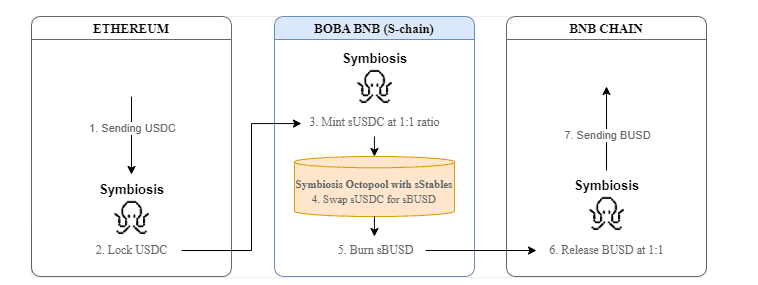
Send funds across any chain in one click – no KYC, no bridge, no delays.

Crypto swapping for international transfers – how does it stack up?
When it comes to sending money abroad with crypto, most methods fall into three categories: centralized exchanges (CEXs), manual DeFi flows, and smart, automated platforms like Symbiosis.Finance.
Here’s how they compare:
Method | KYC Required? | User Steps | Time to Recipient | Fees & Friction | UX Risk / Complexity |
Centralized exchanges (e.g. Binance) | Yes – full KYC | Buy → Withdraw → Bridge → Swap → Send | Hours → Days (bank delays) | Withdrawal fees, FX margins, spread. | Moderate; risk of delays and custody issues |
Manual bridging + swapping | No (pure defi) | Buy crypto → Bridge → Swap → Send | Minutes → Hours | Gas, slippage on bridges, multiple tx | High; multiple protocols, error-prone |
Symbiosis direct swap | No | Buy crypto → Use Symbiosis → Delivered to recipient | ~1 minute | One protocol fee + gas – no hidden costs | Low – one transaction, one interface, audited contracts |
Why Symbiosis is the best crypto swap tool 2025
No KYC required – Your identity stays private throughout the entire process.
Single transaction, unified interface – No need to jump between multiple services, bridges, or wallets.
Time-efficient – Most transfers complete in under one minute, including bridging and swapping.
Predictable cost structure – No surprise withdrawal fees or FX markups. You only pay the protocol fee and a single gas fee.Lower risk – Fewer steps mean fewer chances for manual error, failed swaps, or lost funds.
Symbiosis offers a decentralized remittance crypto solution that reduces friction, improves delivery speed, and protects user privacy.
Security & best practices
Sending crypto without KYC is fast and flexible – but it requires careful handling. A few basic precautions can go a long way in protecting both you and your recipient.
Start with a test transfer
Always begin with a small amount – just enough to validate the process. This lets you check wallet accuracy, delivery time, routing, and transaction fees before committing a larger sum.
Double-check wallet addresses
Crypto transactions are final. Take a moment to verify that the wallet address you’re sending to is correct. Copy-paste carefully, and manually check the first and last few characters. One wrong digit, and the funds are unrecoverable.
Use stablecoins to avoid volatility
Stablecoins like USDC or USDT offer predictability. Swapping volatile assets into a stablecoin before transferring ensures the recipient receives a consistent value – especially helpful when sending money across borders where prices may fluctuate mid-route.
Secure your wallet setup
If you're transferring large amounts, consider using a cold wallet for storage. Use hot wallets only for executing transactions and never store private keys or recovery phrases in digital form. Keeping your security hygiene strong is vital – update your passwords, use 2FA, and rely on trusted tools.
Avoid phishing and fake tools
Only access Symbiosis via the official site. Fake apps, cloned websites, and deceptive tokens are common in the crypto space, and they're designed to trick even experienced users. If you’re not sure, don’t interact.

Send money crypto without KYC – final thoughts
The idea that anyone, anywhere, can send and receive money without a bank, without delays, and without giving up their identity is no longer futuristic.
With Symbiosis, decentralized remittance isn’t just a possibility, it’s a daily-use solution. You don’t need to rely on exchanges, hand over your passport, or wait for business hours. You can buy crypto without KYC, swap it cross-chain, and deliver stablecoins directly to the recipient’s wallet – all in one step.
It’s financial access made global, fast, and fair. It’s a tool for freelancers in emerging markets, for families sending support, for businesses operating in high-FX-cost regions.
What’s more – it’s all built on DeFi, making it transparent, secure, and censorship-resistant.
Symbiosis takes what used to be a five-step process across multiple platforms and turns it into one secure transaction. That’s not just a technical upgrade – it’s a shift in how cross-border finance works.
If you’ve ever struggled with wire transfers, delayed payments, or opaque remittance fees, it’s time to try something different. Now, anyone with a wallet can receive money. And anyone with crypto can send it, quickly, privately, and globally.
Bridge and swap to anyone’s wallet instantly with Symbiosis.
Sending money abroad with crypto – FAQs
Can I send crypto abroad without going through KYC?
Yes, you can send money internationally using crypto without going through KYC (Know Your Customer) verification. By using self-custodial wallets and decentralized platforms like Symbiosis.Finance, you avoid identity checks, document uploads, and centralized platforms. This method lets you transfer funds across borders without providing any personal information, making it ideal for users who value privacy and efficiency.
What is the best way to send money abroad using crypto?
The best method for sending money abroad via crypto is to combine no-KYC acquisition (via a Bitcoin ATM or peer-to-peer platform) with a cross-chain swap protocol like Symbiosis.Finance. This allows you to buy crypto privately, then bridge and swap it directly into your recipient’s wallet in one step. It’s faster than bank transfers, cheaper than centralized exchanges, and doesn’t require the recipient to do anything.
How can I buy crypto without KYC?
There are several ways to buy cryptocurrency without ID or registration:
Bitcoin ATMs: Common in Europe and North America, these allow purchases up to around €990/day without triggering KYC requirements.
Peer-to-peer platforms: Sites like Bisq, LocalCoinSwap, and Peach Bitcoin let you buy BTC or ETH using SEPA, cash, or vouchers, all without ID.
Non-custodial DEXs: If you already have some crypto, you can use decentralized exchanges like Uniswap, 1inch, or DODO to acquire stablecoins or other tokens privately.
These methods are especially useful for those looking to protect their privacy or operate outside of restrictive banking systems.
How does Symbiosis.Finance work for cross-border transfers?
Symbiosis is a decentralized protocol that lets you perform a swap, bridge, and delivery in one transaction. You:
Connect your self-custodial wallet
Choose a source token and blockchain (e.g. Ethereum USDC)
Select a destination token and blockchain (e.g. BNB Chain USDT)
Input the recipient’s wallet address
Symbiosis finds the best route, executes the cross-chain bridge and swap, and delivers the funds to the recipient – without any need for centralized exchanges, KYC, or custodianship.
What are the benefits of using Symbiosis for international money transfers?
Symbiosis enables you to:
Send money with no KYC, no registration, and no bank accounts
Execute cross-chain swaps with stablecoin delivery
Avoid manual bridging, platform lock-ins, or exchange withdrawal delays
Complete transactions in under one minute
Use a wide range of supported chains (Ethereum, Polygon, BNB Chain, Solana, and more)
It’s ideal for freelancer payments, family remittances, and global peer-to-peer transactions – especially in regions where banking access is limited or remittance costs are high.
Does the recipient need to use Symbiosis or perform any extra steps?
No. That’s the beauty of this method. When you use Symbiosis.Finance, your crypto is bridged and swapped in one transaction, and the recipient gets the funds directly in their wallet – already on the correct chain, in the correct token. They don’t need to bridge, convert, or interact with DeFi tools at all.
Is this method safer than using a centralized exchange like Binance?
How fast is a Symbiosis crypto transfer?
Yes, in many ways. Centralized exchanges like Binance require full identity verification, can freeze funds, impose withdrawal limits, and often charge multiple fees. In contrast, Symbiosis is non-custodial, meaning your assets stay in your control. It’s also audited and battle-tested, with refund protections built in – if a transaction fails, your funds are returned automatically.
Send money crypto without KYC – final thoughts.
Most transfers through Symbiosis take under 60 seconds, even when crossing chains. That includes the swap, bridge, and delivery. Compare that to the 1-3 day delay common with bank wires or centralized remittance services, and it becomes clear why decentralized crypto transfers are gaining traction.



Editorial Team


FAQs
Got questions?
Still have questions? Contact us and we’ll help you out.
01
Can I send crypto without KYC?
You can send money internationally via crypto without KYC by using a self-custodial wallet and decentralized platforms like Symbiosis.Finance. There are no ID uploads, document checks, or account logins — you just connect your wallet and go. Note that the initial fiat on-ramp or final off-ramp may still require verification depending on the method and jurisdiction.
02
How can I do a no KYC money transfer with crypto?
The simplest no-KYC path is to buy crypto privately (via a Bitcoin ATM or P2P platform), then use Symbiosis to bridge, swap, and deliver stablecoins directly to the recipient's wallet in one transaction. There's no exchange, no registration, and no recipient effort required. Most transfers complete in under a minute.
03
Can I send crypto without an account or login?
Yes — with a decentralized protocol like Symbiosis you only need to connect a self-custodial wallet such as MetaMask or Trust Wallet. There's no account creation, no email, and no login. You control your private keys throughout, so no third party can hold or freeze your funds.
04
How can I buy crypto without ID or verification?
Bitcoin ATMs let you insert cash and receive BTC with no registration — in much of the EU you can transact up to €990/day under MiCA rules without triggering KYC, though fees run 6–12%. Peer-to-peer platforms like LocalCoinSwap, Peach Bitcoin, and Bisq also let you buy BTC or ETH via SEPA or cash without ID. Both methods keep your crypto in a self-custodial wallet.
05
What is the best way to send money abroad using crypto?
The best approach combines no-KYC acquisition (Bitcoin ATM or P2P) with a cross-chain swap protocol like Symbiosis. You buy crypto privately, then bridge and swap it directly into your recipient's wallet in a single step — converting between Ethereum, BNB Chain, Polygon, Solana, or even Bitcoin. This avoids exchange withdrawal fees, FX markups, and multiple error-prone steps.
06
Does the recipient need to use Symbiosis or do anything extra?
No. The crypto is bridged and swapped in one transaction, so the recipient simply gets the funds directly in their wallet — already on the correct chain and in the correct token. They don't need to bridge, convert, or know anything about DeFi. They just need a valid wallet address on the right network.
07
Is sending crypto safer than using Binance or a money transfer app?
Centralized exchanges like Binance require full KYC, can freeze funds, and charge multiple fees, while Symbiosis is non-custodial so your assets stay in your control. That said, crypto introduces irreversible-transfer and address-copying risks, so always double-check wallet addresses and start with a small test transfer. Symbiosis also offers automatic refunds in stablecoins if a transfer fails.
08
Do I need to pay tax when sending crypto abroad?
Often yes — in many jurisdictions crypto transfers can trigger taxable events depending on how the asset was acquired, held, or disposed of. In the U.S., the IRS treats virtual currency as property, so gains or losses can matter even when the transfer is just moving value. Keep records of your transactions and check local rules.
Learn more
Bridge guide
Swap crypto without KYC | no ID, no signup needed
Wondering how no-KYC swaps actually work, where the on-ramp and off-ramp limits kick in, and which chains you can move funds across? We break down what's real and what's hype in 2025.
Read article
Best crypto swap platforms: top cross-chain swaps
Picking a chain swap tool comes down to fees, speed, and how many networks it reaches. We break down the platforms worth your tokens and where each one actually shines.
Read article
Best crypto swap sites: top instant & low-fee picks
Picking a swap site comes down to a few things: real fees, supported chains, and whether you keep custody. We break down how the top crypto swap exchanges actually compare so you swap smart.
Read article
Swap crypto across 50+ networks
Non-custodial. No KYC. Connect your wallet and get started.